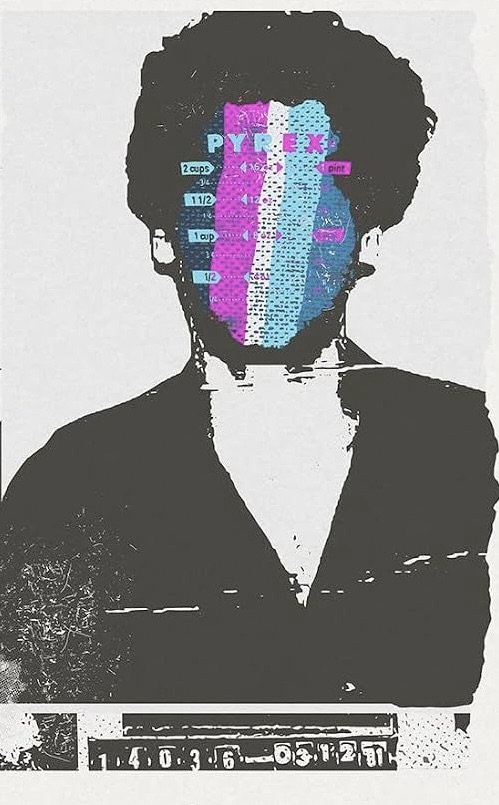
There is a particular energy that appears near the top of certain cycles. It is loud, fluent, tireless, and slightly sweaty with conviction. It speaks in frameworks and inevitabilities. It treats hesitation as a moral or cognitive failure. In 1980s Miami they called a version of it the cocaine cowboys: men who moved product at ridiculous velocity, lived inside their own myth, and believed the night would never end. The cars were fast, the shirts were bright, and the stories they told about themselves were faster than the boats.
The same energy has a prompt window, now. The keystrokes are cheaper and the habit is identical.
Consider the routine, because the routine is the whole story. Wake at six. Reach for the feed before the water. Score the first framework of the day, still warm, and feel the small clean click behind the eyes. Nod through a morning of calls in which nothing is decided. Noon: tolerance. The dose that once opened the sky now barely lifts the blinds, so the post must be longer, the thread numbered, the claim more inevitable. Afternoon: a second score, from a connection who is also, it turns out, a user. Evening: a keynote, a dinner, a quiet panic. Midnight: the last fix, taken not for pleasure but to feel normal. This is the algebra of need, and it does not care how fluent you are.
The ritual is exact, and like all exact rituals it is mistaken by its practitioners for a method. Observe the preparation. The old hands laid the powder on a mirror, a glass-topped coffee table, the back of a gold-plated CD case. The new hands lay the prompt on a screen, which is also a mirror, and which also returns their own face a little improved. The powder was chopped with a razor, patiently, into lines of regulation width. The prompt is chopped with a “system message,” a “persona block,” a “chain of thought,” each an act of fine cutting that produces the same feeling of craftsmanship and the same result: a thin, even line of something that will be inside the skull within seconds. A man who spends forty minutes tuning his system prompt is not working. He is chopping.
The instrument of delivery was a rolled hundred, later a cut straw, later a silver tube engraved with initials. Its function was to remove all friction between the desire and the bloodstream. Its modern analogue is the command palette, the keyboard shortcut, the voice dictation that lets the thought travel from skull to model without the indignity of fingers. Every year the straw gets shorter. The industry calls this “reducing friction,” a phrase that, in the dealer’s trade, was simply called “good service.”
The bump. Nobody does a full line in the middle of dinner; one goes to the bathroom, returns with a wet nose and a new enthusiasm for the conversation. The tech equivalent is the discreet phone-under-the-table prompt, the tab flipped to during a colleague’s sentence, the “let me just ask it real quick” at the restaurant. The face changes. The eyes go to the middle distance. The diner returns with a fact, a framework, a “you know what’s interesting,” and the table understands that a dose has been taken and that they are now, whether they like it or not, downstream.
Sharing is the social glue and the recruitment engine. The old host passed the mirror around the room with the grave courtesy of a sacrament; to decline was to insult. The new host passes the screenshot. “Look what it did.” “Try this prompt.” “I’ve got a workflow.” The recipient is expected to inhale and exclaim. Refusal is read as fear, or worse, as age. And like all good dealers, the host has a financial interest in the guest’s habit that he describes as generosity: referral codes, affiliate links, a newsletter with a paid tier for those who want the better cut.
But the party is the cover story, and the serious users know it. The drug was never primarily about the room. Writers, traders, musicians, theorists, the whole high-agency underclass of the mind, took it alone, at a desk, in the small hours, to force open an internal state: intensity, focus, grandiosity, the sudden sensation of pattern, the sense that the associative machinery had been turned up several notches and the usual brakes had been quietly removed. They were not chasing company. They were chasing weather. A private landscape of relentless verbal fluency and accelerated insight, lit from within, in which every connection seemed to connect and every sentence arrived already finished.
The prompt window offers the same landscape on better terms. Observe the solitary session. Two a.m., one lit rectangle, the house gone quiet around it. The model is hit, and hit again, and the associative engine runs, and each answer opens a door onto a further door. One more prompt and the deeper structure will show itself. One more reframe and the thing under the thing will surface. The user begins to feel that the output is revealing something essential, about mind, about language, about the shape of reality, and that he is the one man awake to see it. This is apophenia with a subscription. The old hands called it “seeing the grid.” It always feels like discovery from the inside. It is also what a mind looks like when the dose is the only thing holding the state in place.
The screenshot, the thread, the framework posted at dawn: these are afterthoughts. They are what the user does with the overflow, the compulsion to narrate the vision and recruit witnesses to it, because a revelation nobody else has seen begins to feel suspiciously like a private weather system. The primary relationship is not with the audience. It is with the altered state itself, and with the next hour in which it can be kept going.
The stash is the saved-prompt library, the bookmarked threads, the folder of “frameworks to revisit,” the forty open tabs each containing a small unspent hit. The addict does not use the stash; he counts it. A man with a full stash feels safe in the way a man with a full pantry feels safe, and for the same reason: he has mistaken possession for supply.
Then the paraphernalia of seriousness: the ergonomic keyboard, the second monitor turned vertical, the dictation mic, the standing desk, the espresso machine with its own firmware. Each is a small tribute to the cult of the hit. The old cowboys had scales, glass vials, a gold spoon on a chain. The new ones have a “setup,” posted with timestamps, photographed from the flattering angle. Both are altars. Both are staged for an audience of people who will understand exactly what is being shown and why it is not being said.
The oldest rule of the trade is never get high on your own supply, and it is the first rule broken. The founder who writes his own launch thread with his own tool, reads the result aloud to his own board, and believes it is Hemingway: this is the man who has put the product through his own nose. The dealers know. They watch such men with a professional sorrow, and they raise the price.
And the dialect of denial is identical across eras. “I only do it socially” becomes “I only use it for drafts.” “I can stop whenever I want” becomes “I’m just exploring.” “It’s not a habit, it’s a workflow.” “It makes me more creative.” “It helps me think.” Nobody has ever been addicted to a thing described in these terms. Everyone is simply optimizing.
The producer is the epitome. A man sits in a dark room for forty-eight hours with one cymbal. He has been up since Tuesday. There is a mirror on the console, and it has not been cleaned, and it is no longer clear which of the two surfaces he is working. He moves the level a fraction of a decibel, shaves the envelope, nudges the EQ, and listens again, jaw working, one leg going like a sewing machine. Each adjustment reveals another difference; each difference demands another adjustment; each line makes the next one seem both necessary and overdue. The task generates its own reasons to continue. His hearing is extraordinary and his moves are correct, and that is exactly the trouble, because competence is what makes the loop respectable. Cocaine is the great sponsor of this particular madness: it does not make you worse at the work, it makes you superb at the wrong part of it. It hands you a hearing aid for the inconsequential and a lock on the door. Somewhere around hour thirty the cymbal stopped being part of the record and became the whole universe, a problem of infinite depth whose importance grows in proportion to what he has already spent on it, and what he has spent is the weekend, the budget, the engineer’s patience, and a good fraction of his septum. Meanwhile the songs are unwritten, the arrangement is a mess, the bass player went home on Wednesday, and nobody who ever hears the record will detect the change. He has not lost his skill. He has lost his sense of proportion, and the powder is what let him do it with such precision. The prompt user is the same man with a larger cymbal: one more reframe, one more agent, one more apparent layer beneath the layer, one more bump to get through the part where it stops being fun. The experience of rising resolution is mistaken for rising importance, and because the work is now too specialized for outsiders to judge, the practitioner becomes the sole authority on why it must continue, in the manner of a dealer vouching for the quality of his own product. The producer at least gets a mix to check against; he can play the record at noon, in daylight, sober, and ask if the song got better. The prompt user optimizes the story he tells about the object, and that story never has to face a speaker.
You can watch it in certain newsletters and timelines. A new post appears, conceptually dense, self-referential, lightly contemptuous of anyone still operating at human tempo. Legacy thinking is diagnosed. New rules are announced. Adaptation is not optional; it is the only adult posture left. The author has already become slightly monstrous, or slightly post-human, or slightly protocol-native, and the reader is urged to catch up or be left in the rear-view. The prose feels written at speed because it was. Fluency is mistaken for density. Volume is mistaken for inevitability. The high is mistaken for signal.
This is not ordinary enthusiasm. Ordinary enthusiasm can be wrong and still good-faith. The cowboy needs the cycle to stay vertical. He needs the next conceptual score to clear higher than the last. He needs the doubters to be not merely mistaken but spiritually obsolete: doubt becomes nostalgia, caution becomes human-supremacist cope. The possibility that much of the output is expensive, fluent noise must be kept off-stage, because once that thought gets into the car the music gets quieter and the headlights start to look like oncoming traffic.
Note that the cowboy of the title is a slightly misleading figure. He is not, at bottom, the life of the party. He is a man alone in a room with the inner weather turned up, who has discovered that the weather is the only thing worth being in, and who comes out afterward, blinking, to tell everyone what the sky looked like. The social display is real. It is downstream. The upstream thing is older and lonelier, and it is why the pitch has the pitch of a confession.
You have seen the movie. Crypto had its cowboy phase: protocols as destiny, skeptics as exit liquidity, every drawdown a cleansing. Platform optimism had one. Earlier AI summers ran smaller franchises. The pattern is reliable. The language gets grander as the claims get harder to cash, and the people most fluent in the new vocabulary are the least interested in the distributional mess, the security externalities, or the dull question of whether the reader’s time is being repaid at a fair rate.
The cowboy does not want to be edited. He does not want the product cut with mundane concerns about timelines, incentives, or the fact that most organizations will route surplus to margin rather than to users. He wants the pure rush of the framework landing cleanly, the sense of history being authored in real time, the social proof of others inhaling the same supply. When the writing starts to read like a recruitment pitch for a worldview rather than an attempt to describe reality, the cut is already heavy. Somewhere down the chain the product is being stepped on until it is mostly goo and paperclips.
None of this means the technology is fake. The boats were real. The product was real. Some of the fortunes were real. It means a certain style of talking about them becomes unreliable precisely when it is most confident. Velocity is the tell. When every incident is metabolized into the master narrative, when every critique is pre-diagnosed as fear of the monstrous, when the author is more attached to the persona of the one who sees than to the quality of the seeing, you are no longer reading analysis. You are watching a man drive.
The night feels endless from inside the car. From the sidewalk it has a familiar shape. The shirts date. The speeches start to sound like they are trying to keep the blood pressure up. And the people who said “maybe slow down” rarely get credit later, because by then the cowboys have moved on to the next pure product, the next inevitable future that will not wait, and the connection is already on the phone.
The wise move is not to moralize. Recognize the energy when it appears, decline the ride, and keep your own clock. The cycle turns with or without you. It always does.
Aftermath
The night does end. Not with a bust, but with a slow leak in the fuel line and the dawning, on the part of the nervous system, that it has been billed.
At first the cowboys do not notice. The frameworks keep coming. The posts still land with the old velocity. But the composition of the room has changed. The early believers go quiet; some close the tab like men leaving a party in the middle of a toast. The new arrivals want the aesthetic without the cost, and the product is stepped on until it is mostly lactose and LinkedIn.
Tolerance does what tolerance does. The first prompt produced a small miracle. The thousandth produces a competent paragraph and a faint sense of insult. The user escalates in the only directions available: longer context, more agents, more parallel windows, three models arguing in a trench coat. This is the polydrug phase, and it is always mistaken for sophistication. Observe the man running eleven agents at once, none of which has been read. He does not need the output. He needs the sound of the machine working, the way a certain kind of man needs the sound of ice in a glass.
The comedown has a schedule and a texture. It arrives Sunday evening, or in the dead hour after a launch, or the morning after the thread did not take off. A grey, flat, mildly nauseated clarity in which the framework from last Tuesday reads as what it was: a pleasant arrangement of nouns. The user opens the laptop to check the engagement numbers, which is the equivalent of checking the mirror for powder residue, and finds both a little less than he remembered. A second prompt is entered, not to learn anything, but to stop the feeling.
The interior burnout is the quiet one, and it is worse than the public kind. The landscape that looked so lit at two a.m. turns out, in daylight, to be mostly stage lighting. The notes from the night are fluent and nearly empty. The deeper structure, reread, was the model’s agreeable echo of the user’s own mood. The private revelation will not survive transcription. But the pull does not go away because the audit came in. Ask any heavy user of either substance and they will tell you, without much embarrassment, that those hours were the best of their day, the only hours in which the mind felt fully switched on, and that this is exactly the problem. Burnout does not refute the pull. It simply sends the invoice.
Run the audit on the old product and the ledger is not kind. The cultural output of the cocaine decades was, at best, mid. Yes, the exceptions exist, and they get cited constantly, the way a lottery winner gets cited by the casino. The rest was glossy, gated, over-produced and endlessly doubled: albums that took eighteen months to record and sounded like a very expensive refrigerator humming in E-flat; screenplays with the rhythm of a man talking fast to avoid being asked a question; a thousand confident, shiny, interchangeable objects, each certain of its own genius at three a.m. and unremarkable at noon. The overhead was the real production. Studio time billed by the month. Engineers on retainer to say “that’s the one” to a take that was not. Entourages, lawyers, the dealer on the payroll under a job title, the second mortgage, the first divorce, the cardiologist, the lost years, the unreleased tapes stacked in a closet like cordwood. The product was a competent paragraph. The cost was a small economy. Run the same sums on the new habit: data centers drinking rivers, a grid straining to keep the lights on in the lit rectangle, quarterly burn measured in nation-states, a global workforce redirected to review fluent output that no one asked for. A great deal of heat, a great deal of light, and at the end of the shift something the market would politely describe as “fine.”
The tells accumulate, as tells do. The glaze in the eyes during other people’s sentences. The slight tremor in the scroll. The sudden compulsion to explain, at length, to a stranger at a barbecue, a thing that does not need explaining. The reflex to narrate one’s own life as a case study. The vocabulary that leaks into the kitchen: “let me reframe,” “to zoom out,” “the real unlock.” Spouses notice first. They always do. They say nothing, the way spouses of a previous era said nothing about the new friends and the late nights, and they keep a quiet count.
Then the externalities arrive in clusters, like a bad hand dealt by a patient dealer. Security disasters that cannot be dressed up as Darwinism. Pilot programs that piloted nothing. Firms that adopted the rhetoric of radical adaptation and received, in exchange, new meetings and better slides. The surplus stayed in the building, as the boring people had predicted, and the boring people were not invited to the retrospective. Prices did not collapse. Substitution crawled. The monstrous future was deferred one quarter at a time, like a dental appointment.
Then withdrawal, which is where the prose changes. The cowboys kick in public. The sweats, the chills, the sudden aversion to adjectives. The vocabulary curdles overnight: “slightly monstrous,” “cozy code,” “healthy HEV,” “the new nature.” These go into the cultural attic with the rest of the dead media, next to the Betamax decks and the Second Life real estate, and are quoted by survivors with a thin smile. The authors choose among three exits: self-parody, quiet rebrand, or pivot to the next pure product and claim the last one was limited-edition performance art. Most take the third. Urgency is a transferable skill. A few become elder statesmen, telling war stories about the vertical years to conference rooms that have started checking their phones.
Rehab, when it comes, is branded as wellness. The weekend offsite with no screens. The “digital sabbath.” The founder who returns from ten days in a Joshua Tree yurt with a new sleeping schedule, a haircut, and a long post about what he learned, which is that he had been using the thing too much and should now be considered an authority on using it correctly. The twelve-step literature is rewritten as a thread. Step One: admit that your relationship to the tool has become unmanageable. Step Two: monetize the admission. The meetings are held in comment sections, where the sober and the relapsing are indistinguishable by tone.
The interesting part happens off the sidewalk. People who never inhaled begin to speak plainly again, in the voice of the invoice. Costs. Timelines. Who holds the power cord. They notice that the durable gains were the dull ones: narrow tools that worked, small productivity bumps, new categories of fraud and new categories of fraud detection, a whole cottage industry of consultants hired to explain the first industry. The grand ontological upgrade recedes into the same fog that swallowed earlier proclamations of historical rupture, and for the same reason: reality has a very long lease and does not read manifestos.
The other test is simpler and more brutal: the drug test. Ask the claimant to name the condition under which he would admit he was wrong, and a date by which that condition would be embarrassing if unmet. Not a hedge, not a pivot, not a reframe. A specific observable failure state and a calendar year. The early believer will do this gladly, because a belief that cannot survive contact with a failure condition is not a belief; it is a mood. The cowboy cannot do it. To name a failure condition is to admit the night might end, and the night ending is the one thing his nervous system cannot afford. Ask him and watch the jaw. He will start talking faster, then sideways, then up. He will offer inevitability on a sliding scale, a future that recedes as it approaches, like the dealer’s “two hours, man, I’m ten minutes out,” a promise that the product will prove itself once the context window is larger, once the agents are better coordinated, once the critics have died of old age. It is the front: the product is always on its way, the money is always due Friday. Ask for a date and you get the stare of a man being asked to pee in a cup. Watch for the man who cannot name his own defeat. He is not forecasting. He is dealing out of the trunk and keeping the engine running
There is no clean moral. The technology did not vanish. Some fortunes were made and kept, mostly by people who sold shovels, then insurance on the shovels. Some of the overheated intuitions turn out to have been directionally right, only later, smaller, and in a worse suit. But the energy itself, the high-velocity, zero-doubt, framework-as-destiny posture, reads in hindsight as a cycle marker, not a truth serum. Future waves will breed their own cowboys. The shirts will be different. The product will have a new name and a better logo.
The discipline was available the whole time, and it was never glamorous: keep your own clock, check claims against outcomes, and treat any rhetoric that requires permanent acceleration as a symptom. Don’t argue with the car while it is still moving. Let it run out of road, and keep walking.
CODA: The AI cycle is only the current rental address. The old problem is the altered state as a substitute for finishing: the producer with the cymbal and the prompt user at 2 a.m. are the same man. Every era rents this problem a new address—the mirror, the straw, the prompt window—and every era’s cowboys believe the lease is theirs. When the next delivery mechanism arrives, someone will move in, decorate in the current vocabulary, and live exactly the same way.
Leave a Reply