Music got there first, so it’s tempting to read its collapse as a preview of what’s coming for writing. The instinct is sound. The mapping isn’t quite as clean as it looks, and the differences matter more than the similarities.
Recorded music had real bottlenecks. Studio time cost money. Mastering required equipment and expertise most people didn’t have. Distribution ran through a small number of labels who controlled pressing plants, radio relationships, and shelf space. When digital production and distribution collapsed those bottlenecks — cheap DAWs, MP3s, then streaming — the industry didn’t just get more crowded. It got restructured, over roughly two decades, from a scarcity economy into an abundance economy. That restructuring was slow enough that new equilibria had time to form. Bandcamp pages, word-of-mouth labels, an artist’s live show functioning as the actual product with recordings as advertising for it. The old economics never came back. But something did come back: legibility. Small trusted networks turned out to be reasonably good at filtering signal from noise, once nobody expected the old scale of stardom to persist.
Writing never had that bottleneck to begin with. A keyboard was always free. The gatekeeping in publishing was never a production constraint — it was a curation constraint, a small number of editors deciding what got amplified out of an already-enormous slush pile. What generative AI removes isn’t a cost floor, because there wasn’t one. It removes the labor floor: the tens of thousands of hours it used to take to produce competent prose at volume. That floor was doing more filtering work than anyone gave it credit for, because writing badly used to be effortful in a way that discouraged most attempts past a first draft. It no longer is.
This is why the flood isn’t music’s slow seep from gatekept scarcity into bedroom abundance. It’s closer to what would happen if, overnight, anyone could master and press a record at zero cost and zero skill, with a machine that could also write passable songs for them if their own ideas ran out. Clarkesworld’s submission shutdown wasn’t a metaphor for this. It was the live preview, arriving a full magnitude faster than music’s version did, because there was no infrastructure lag to slow it down.
The timeline gap isn’t incidental to the argument — it’s the hammer blow underneath it. Affordable synthesizers and drum machines put cheap sound production within reach of bedrooms by the late 1970s and through the ’80s; it still took roughly another two decades — DAWs through the ’90s and 2000s, streaming’s dominance arriving only in the 2010s — before the industry fully restructured. That slowness was a feature, not friction: it gave labels time to pivot, live scenes time to recalibrate around performance-as-product, and audiences time to develop new filtering heuristics. LLMs have gone from barely coherent to publishable-quality output in well under a decade. Music’s collapse was a slow seep. Writing’s is a flash flood. There isn’t time for a new equilibrium to crystallize — no time for reading-aloud-equivalent rituals to become common practice, no time for boutique curatorial habits to harden, no time for the market to bifurcate organically the way small labels and Bandcamp did. The speed differential doesn’t just amplify the effect. It changes its kind, because institutional trust degrades on a timescale much faster than it can be rebuilt.
It’s worth being honest about what the glut actually produced in music, too, because it wasn’t only noise. Cheap home production didn’t just flood the market with mediocrity — it let genuinely strange, prolific, uncompromising acts exist who never would have survived a label’s cost structure. Bedroom engineers with unusual output rates and idiosyncratic sensibilities found real audiences precisely because the barrier that used to filter them out — studio budgets, A&R approval, someone else’s taste standing between the artist and the tape — was gone. The lowered floor didn’t just let bad work through. It let unfundable work through, which is a different thing, and some of the era’s most interesting music came from exactly that gap: DIY acts who could iterate at a volume and on a timeline no label would ever have bankrolled, refining a voice in public because the cost of doing so had collapsed to nearly zero.
There’s every reason to expect the writing equivalent. The labor floor that AI removes was never only screening out the untalented — it was also screening out talented people who simply couldn’t sustain the output required to find their own voice, or who had ideas outrunning their execution speed, or who lacked the specific stamina for the anaerobic 4-6-hour heavy lift this whole conversation keeps circling back to. Someone with a genuinely interesting sensibility and weak execution bandwidth is about to get a lot more productive, and some real work is going to come out of exactly that combination — voices that would have stayed unrealized under the old cost structure, the way King Gizzard-style prolificacy stayed impossible under a label’s release schedule. That benefit is real and shouldn’t be waved away by the volume argument.
The part that should still worry a writer, though, is what music kept that writing doesn’t have.
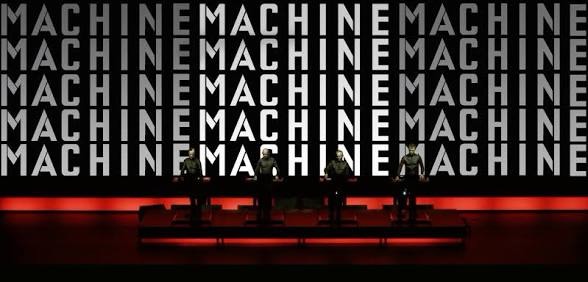
Even at the bottom of the collapse, music retained something non-substitutable — though it’s worth being precise about what, exactly, because the easy version of this claim is wrong. “Can this person actually sing” is a perfectly good entry point into the idea — it’s the version most people reach for instinctively, and it’s not wrong so much as too narrow, one legible instance of a broader floor rather than the floor itself. The mistake would be stopping there and concluding the floor is the body: that music’s non-substitutability ultimately cashes out to organic performance, breath, a throat. It doesn’t. Kraftwerk is still music. So is musique concrète: tape, found sound, procedures, accidents, nothing resembling a voice anywhere in the signal chain. A synthesizer doesn’t sing and a tape recorder doesn’t have a throat, and neither of those facts made the results interchangeable with each other or with anything else in their category. What survived wasn’t organic performance. It was a perceptually legible floor of particularity — something in the relationship between the sounds, their selection, their timing, their texture, their construction, that keeps an artifact unmistakably itself rather than a merely competent instance of the category it belongs to. “Can this person sing” happens to be one easy-to-check symptom of that floor when a body is involved. It isn’t the mechanism, which is why the mechanism survives perfectly intact in cases with no body at all. A machine can stand on that floor. A machine can even help invent the language that stands on it. What the floor requires isn’t a body. It’s an artifact that resists being manufactured by satisfying nothing more than the statistical expectations of what such a thing is supposed to sound like.
Text may not have an equivalent floor yet, or at least none that’s widely legible. Competence is now cheap and uniform in a way “sounding like music” never became, even at Kraftwerk’s most machinic. The genuinely hard question isn’t whether AI can produce fluent human prose — obviously it can, the way a drum machine obviously produces a beat. The question is whether prose has anything analogous to what makes a Kraftwerk track, a piece of musique concrète, or a badly recorded but unmistakably particular song more than a competent instance of “music” — some property that stays legible as this thing rather than dissolving into the category. If it doesn’t, writing has a problem music never quite had. The danger was never that a machine could make the art. It’s that a machine can now generate an effectively unlimited number of artifacts occupying the exact same perceptual space as the art, with nothing to mark the boundary between one and the other.
So the honest fear isn’t just “more noise, fewer people making a living” — that’s music’s story too, and music absorbed it without becoming worthless, particularity floor intact even at its most synthetic and machine-mediated. The sharper fear is that writing’s collapse arrives without the compensating floor. No perceptually legible particularity means no obvious thing for small trusted networks to curate around, which means the legibility that eventually stabilized music’s abundance economy might not arrive for writing on any comparable timeline — if it arrives through curation at all, rather than through some other, cruder signal entirely (institutional pedigree, platform algorithm, brand name, anything except the text itself).
If there’s a project worth taking seriously here, it’s finding writing’s equivalent of that floor — some property of a text that’s cheap to perceive, hard to fake by satisfying category expectations, and correlates with the thing actually worth protecting. Not intelligence, which is functionally solved and therefore useless as a filter; a fluent AI paragraph and a fluent human one are both, by now, “competent instances of prose” in exactly the way a well-programmed sequencer produces a competent instance of a beat. Whatever the analogous floor turns out to be for text, it’s unlikely to be discovered by looking for a human hand behind it, any more than Kraftwerk’s particularity turned out to be a hidden voice. It has to be found — or, if it isn’t already latent in how readers perceive prose, built and made legible on purpose.
Music’s version of this crisis resolved into scale collapse without value collapse: fewer people paid, most of the field pushed back toward the avocational, but the good work — including work that could only exist because the floor dropped — remained findable by people willing to look. That’s a real loss, and a real gain sitting inside the same collapse. It is not, however, the worst available outcome. The worst available outcome is the one where the floor never becomes legible at all, curation-by-relationship never gets the chance to replace curation-by-institution because there’s nothing stable enough for either to curate around, and the field settles instead into a permanent fog where almost nothing can be reliably told apart from almost anything else. That’s the actual worst of both worlds: music’s scale collapse, without music’s compensating floor. Being downcast about that isn’t catastrophizing. It’s noticing the shape of the thing a few years before the noticing becomes common.
Leave a Reply