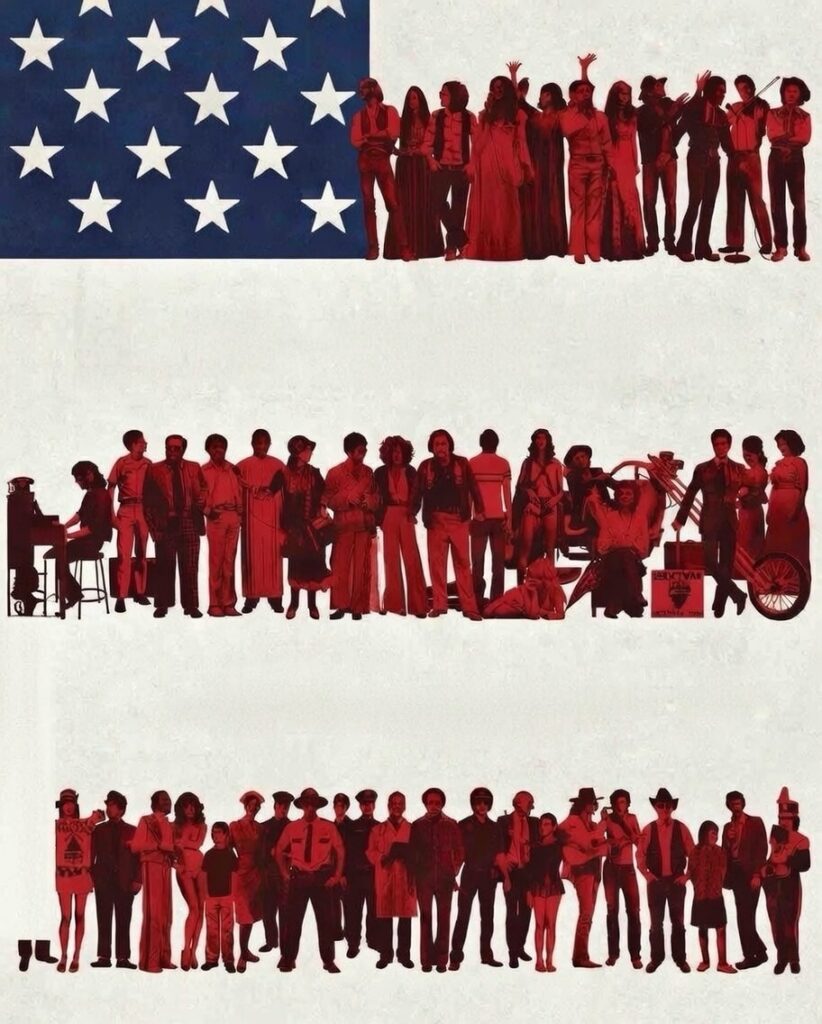
A Note On My Return
They let me back into Nashville last Tuesday, which felt appropriate. Tuesday is the day of the week that has given up trying to be anything in particular—not the fresh start of Monday, not the momentum of Wednesday, not the desperate optimism of Friday. Tuesday is a day that has signed a consent form and is simply waiting to see what happens next. My lawyer, a compact and deeply exhausted man named Gerald who bills at $400 an hour and communicates primarily through sighs of varying intensity, had spent the better part of eighteen months negotiating the terms of my return. I had been, in the legal language of the agreement I cannot fully reproduce here for reasons Gerald has explained to me three times, “persona non grata within the metropolitan Nashville-Davidson County limits and surrounding incorporated areas” following what Gerald insists on calling “the Opryland Incident” and what I insist on calling “a profound misunderstanding between myself, the management of a federally protected cultural institution, and the laws of physics as they apply to a man on a Segway carrying a metal detector and a signed first edition of Robert Penn Warren’s All The King’s Men.”
The charges, Gerald would like me to clarify, were dropped. All of them. Eventually. The restraining order from the Country Music Hall of Fame expired in March. The one from the Gaylord Opryland Resort technically expired in March also, but their head of security—a former Navy SEAL named Doug who I believe holds a personal grudge that predates the Incident and possibly predates me—had been sending Gerald what Gerald describes as “legally interesting correspondence” for several months afterward. The horse has fully recovered. The hat is still missing. And the seventeen-minute voicemail I left for the president of the Grand Ole Opry at 3:47 AM explaining my theory about the metaphysical relationship between bluegrass and the fall of the Roman Republic was, in Gerald’s professional assessment, “not helpful to our position, and also kind of brilliant, but mostly not helpful.”
What I can tell you is this: I was not at fault. Not entirely. Not in the ways that matter.
What I can also tell you is that Nashville has a way of doing this to people—of creating the conditions for a certain kind of behavior and then expressing surprise when that behavior occurs. The city is engineered for it. The humidity alone is a provocation. Add to that the neon, the bourbon, the sheer aggressive cheerfulness of a place that has decided, at the civic level, to simply refuse melancholy—and something is going to give. That something, in the winter of 2026, was me. And the Segway.
And, tangentially, a bronze statue of Minnie Pearl that I want to be very clear I was trying to protect, not climb.
Gerald had negotiated the following terms of my return: I was not to enter the Opryland Hotel complex. I was not to contact Doug directly or indirectly. I was not to bring a Segway, a metal detector, or any device that Gerald described in the agreement as “ostensibly investigative in purpose or appearance.” I was permitted a rental car, a notebook, and a photographer named Cisco who owed me a favor from the Sturgis piece and who had, upon hearing the nature of this assignment, immediately asked if the favor could be applied to something else instead. It could not.
I was also, Gerald reminded me three times during our final call before I boarded the plane, to avoid what he called “the situation with the substances,” by which he meant I should not be on acid when I arrived. I want to be clear that I honored this instruction fully and completely. I was not on acid when I arrived. I was on acid approximately forty minutes after I arrived, which is a different thing, and which occurred after I saw a thirty-foot inflatable cowboy hat rotating slowly above a bar called “YEEHA$: THE NASHVILLE EXPERIENCE” and made a decision that Gerald would later describe, via text, as “deeply on-brand and legally his own problem.”
<>
The rental car—a beige Nissan that apologized for existing—had a bumper sticker that read “POWERED BY JESUS AND SWEET TEA,” which I’m fairly certain is also how they fuel the nuclear reactor beneath Dollywood. My traveling companion, a former session guitarist named Randy who’d been legally dead for three minutes in 1987 before being revived by a nurse who slapped him and said “not on my shift, asshole,” assured me that Nashville had changed. “It’s like if Disney bought hell and turned it into a food court,” he said, lighting a cigarette that turned out to be a vape pen shaped like a miniature banjo.
The city rose out of the Tennessee humidity like a pharmaceutical mirage—neon honky-tonks stacked vertically now, like slot machines bolted to a strip mall cathedral. The skyline had that unmistakable quality of a place designed by committee: architectural confidence without a single dangerous idea. Every building looked like it had been approved by seventeen different focus groups and one guy named Derek who “really got the vibe.” Broadway had become a canyon of corporate joy, every bar a brand extension, every song a QR code begging to be scanned. I watched a bachelorette party—twelve women in matching hot-pink cowboy hats that said “NASH BASH 2026”—stumble out of a four-story honky-tonk called “Luke’s Real Authentic Down-Home Nashville Experience™,” which was about as authentic as Randy’s banjo vape. The ghosts were still there, but they’d been franchised. You could buy them for $39.99 plus tax and a souvenir shot glass that played “Friends in Low Places” when you tipped it back.
Robert Altman understood this place before it finished eating itself, back when Nashville still had enough self-awareness to feel shame. His 1975 film wasn’t a movie so much as a long, looping panic attack disguised as a musical—twenty-four characters drifting in and out of each other’s gravitational fields, all of them chasing some version of America that had already packed up and skipped town like a landlord avoiding angry tenants. In 1975, the danger was still implied, lurking in the edges of the frame like a creditor you kept spotting in your peripheral vision. By 2026, it’s a zoning regulation. The danger has been assessed, permitted, insured, and turned into an immersive experience with three pricing tiers and a photo package available at checkout.
Randy told me about a new bar where they’d hired actors to play “authentic Nashville characters”—broke songwriters, washed-up singers, depressed steel guitar players—and tourists could pay extra to “jam with the locals.” I asked if the locals knew they were being impersonated by theater majors from Indiana. “The locals left in 2003,” he said, exhaling watermelon-scented vapor.
I dropped acid somewhere near Music Row, which now feels like a business park designed by a focus group that once heard about creativity from a Lyft driver who’d skimmed the Wikipedia page for “bohemian lifestyle” while waiting for his shift to start.
The blotter was shaped like a tiny guitar pick, which I appreciated—at least someone still understood symbolism, even if they were operating from a storage unit in East Nashville and accepted Venmo. The drug kicked in right as a convoy of black SUVs rolled past—label executives, probably, or influencers, or senators cosplaying as working men, or possibly just one very successful funeral director with a fleet discount. It was hard to tell. Everyone wears the same boots now: seven-hundred-dollar distressed leather that’s been pre-scuffed by workers in a factory designed to make rich people feel rugged. Symbolism has been outsourced to the same overseas facility that makes the boots, the hats, the authenticity. Randy pointed at one of the SUVs and said, “That’s either a country star or a crypto billionaire who bought a Nashville penthouse because Joe Rogan mentioned whiskey once.” The acid made both options feel equally plausible and equally apocalyptic.
Outlaw balladry was never as pure as we remember it, and that’s part of why it worked. The bank robbers sang about honor because the banks were stealing first. The gamblers talked about fate because they were already cheating. Willie’s blue-eyed bandits weren’t moral men—they were men with codes, which is a very different thing and far more American. Even at its most feral, the music understood something Nashville would later forget: myth only survives if it admits the scam. Johnny Cash didn’t record in Folsom because prison was authentic—he did it because the audience couldn’t leave, because the lie had nowhere to hide. Those songs weren’t anti-system; they were side-system, running parallel to the main track, skimming just enough off the rails to stay alive. The problem wasn’t that the outlaw got commercialized. The problem was that the outlaw stopped admitting he was cheating. They didn’t test well in suburban markets where Karen needed to feel safe while driving her kids to soccer practice.
They were warnings disguised as entertainment, entertainment disguised as journalism, journalism disguised as three chords and the truth. Randy had started hallucinating by now—or maybe I had—and he swore he could see ghost-Willie standing on the corner of 16th Avenue South, shaking his head at a condo development called “The Outlaws at Music Row,” where studio apartments started at $2,800 a month and came with complimentary guitar picks.
Then came the Southern anthems—defiant, sweaty, communal, the kind of songs you sang when you were three beers deep and feeling regional about it. Still dangerous, but easier to chant, easier to sell, easier to play at high school football games without anyone’s mom calling the principal. Lynyrd Skynyrd turning “Sweet Home Alabama” into a political statement that nobody could quite parse but everyone could yell. The Allman Brothers stretching a single song into a forty-minute journey that required recreational drugs and a willingness to let the bass player do whatever the hell he wanted. By the late Reagan years the edges had been sanded down, the blood rinsed off, the cocaine replaced with motivational speaking, and the outlaw was replaced by a pickup truck that never hauled anything heavier than resentment and maybe some decorative hay bales for a fall photo shoot.
The songs started sounding like truck commercials. Then they became truck commercials.
By the time Kid Rock rolled in like a toxic mascot for weaponized nostalgia—a human Confederate flag tattoo wrapped in a Pistons jersey and screaming about states’ rights from the sunroof of a monster truck—the whole thing had curdled into pure populist signaling. Music as merch, rebellion as a lifestyle accessory you could return within 30 days if it didn’t fit your brand or if your wife found out how much you spent at the concert. But nothing captured the terminal velocity of American myth-collapse quite like what Kid Rock posted to his social media accounts in the winter of 2026—a video, apparently self-filmed, delivered with the urgent, slightly glassy conviction of a man who has recently been told something important and needs you to understand it before the feeling passes. “My halftime performance was pre-recorded but performed live,” he explained, in a sentence that should be bronzed and installed outside the Smithsonian. “No lipsyncing like the haters and fake news are trying to report. When they synced the cameras to my performance on Bawitdaba, it did not line up as I explain in this video.”
Read that again. Slowly. Let it metabolize.
Pre-recorded but performed live. Not lipsynced. Just pre-recorded. And performed. Live. The cameras failed to sync with the performance, which was live, but also pre-recorded, and the discrepancy between the live pre-recorded performance and the cameras pointed at the live pre-recorded performance constitutes, apparently, a fake news conspiracy against a man who was, at the time, performing live. Pre-recordedly.
This is not a joke. This is a theological statement. This is the epistemological condition of the American outlaw in 2026, distilled to its purest possible form—a man so marinated in the mythology of his own authenticity that the tools designed to capture reality have begun to malfunction around him. The camera couldn’t keep up. The timeline bent. The live performance existed in a quantum state—both pre-recorded and occurring in real time—and only the haters and fake news refused to understand this because they lack the conceptual framework. Or possibly the correct video settings.
Kid Rock did not invent this condition. He simply had the courage to describe it out loud, on social media, while wearing what appeared to be a trucker hat indoors. He is, in this sense, the most honest man in Nashville—the only one willing to stand up and say, publicly, that the performance was real even though it was pre-recorded, that the cameras lied, that the sync was off, that Bawitdaba deserved better, and that he intends to explain it all in a video that, as of this writing, raises more questions than it resolves. He is the outlaw myth eating itself alive on a phone screen. He is Haven Hamilton with a Spotify account and a grievance. He is the river running backward, the processing plant processing itself, the machine finally, gloriously, beginning to jam.
The acid hadn’t worn off when I heard about the video, and I want to be honest: I’m not entirely sure it ever did. Some doors, once opened, do not close. Some Bawitdabas, once performed live-but-pre-recorded, cannot be un-synced.
The acid showed me Altman’s characters wandering through this new Nashville like refugees from a better delusion, displaced persons from a time when confusion was still honest and chaos hadn’t been monetized into “experiences.” Haven Hamilton would be livestreaming from a whiskey sponsorship booth, his face frozen in thatrictus of country-music cheer, smiling through the terror like a man who knows the check cleared but can’t remember why he needed the money. Every ten minutes he’d remind his followers to “smash that subscribe button, y’all” and shill for a CBD brand that may or may not be legal in Tennessee. Barbara Jean would be trapped in an endless residency at some themed restaurant-casino monstrosity, her breakdown monetized into short-form clips with inspirational captions like “She’s STRUGGLING but she’s SINGING 💪🎤 #MentalHealthMatters #NashvilleStrong.” Her tears would have their own hashtag. Her medication would be sponsored content. The political campaign would still be there, of course—now fully algorithmic, polling in real time, slogans A/B tested before they hit the crowd, every handshake calculated to within an inch of its authenticity, every baby-kiss focus-grouped for maximum relatability across key demographics. The candidate would be either a hologram or an AI or just a really committed community theater actor from Brentwood—again, impossible to tell, especially on acid. Randy saw him too, or claimed to, waving from a digital billboard that also advertised a gentleman’s club and a class-action lawsuit against a mesh hernia manufacturer.
And the crowd—Jesus Christ, the crowd is the real star now, the actual headliner, the main event in a show that never ends because nobody remembers what they came to see. Everyone filming, no one watching. A thousand phones held aloft like digital lighters at a concert for an algorithm. A thousand voices singing the same chorus, none of them listening to the words, none of them wondering why they’re here, what they’re celebrating, what they’re mourning. Patriotism reduced to a ringtone. Freedom as a preset filter. Liberty as a drink special from 4-7 PM, well drinks only, not valid with other offers. The music never stops, because silence might let something honest crawl out—some uncomfortable truth, some unwelcome memory, some faint voice from the past asking what the hell happened to the dream. I saw a man, easily 250 pounds and wearing a shirt that said “THESE COLORS DON’T RUN” (though they had clearly faded in the wash), weeping openly to “God Bless the USA” while filming himself weeping openly to “God Bless the USA.” The recursion made my brain hurt. Randy offered me a pill he claimed was “just aspirin, probably,” but it turned out to be a Flintstones vitamin, which felt deeply symbolic in a way I couldn’t articulate and probably shouldn’t try.
Somewhere near the Cumberland River, watching the tourist pedal-taverns drift past like drunk, singing galleys of the damned, I saw it clearly: Nashville isn’t a city anymore. It’s a processing plant. Raw American myth goes in—outlaws, losers, saints, drunks, dreamers, anyone who ever thought they could make something beautiful without permission—and comes out vacuum-sealed, shelf-stable, and legally non-threatening. Cellophane-wrapped nostalgia. Microwaveable rebellion. The riverboat gamblers have been replaced by hedge funds that buy song catalogs like pork futures. The bank robbers by private equity firms that steal entire music careers through contracts written in language that would make Kafka weep. Same crime, better tailoring. Same theft, but now with quarterly earnings reports and a sustainability initiative. I tried to explain this to Randy, but he was watching a pontoon boat full of bachelorettes chanting “SHOTS SHOTS SHOTS” while their designated driver—the bride, wearing a sash that said “LAST SAIL BEFORE THE VEIL”—looked like she was contemplating driving the whole rig directly into the Opryland Hotel. The acid made the river look like it was flowing backward, which seemed about right for a city that had turned time into a commodity and sold it to the highest bidder.
Altman ended Nashville with a gunshot and a song, the only honest way to finish a story about America—a moment of violence
followed by everyone pretending it didn’t happen while the music swells and the cameras keep rolling. In 2026, the gunshot is silent—an NDA, a buyout, a content moderation policy, a quiet removal from the platform for “violating community standards” we can’t show you because they’re proprietary. And the song just keeps playing, louder, emptier, optimized for engagement, algorithmically designed to hit pleasure centers without requiring thought or feeling or any of that messy human business that makes art dangerous and necessary. The shooting happens every day now, metaphorically speaking, or maybe literally—it’s hard to tell when everyone’s too busy filming to notice the difference between spectacle and tragedy. Randy had stopped talking, which was concerning, but then he pointed at a billboard advertising a new development: “OUTLAW ESTATES: Live Like a Legend (Prices Starting at $1.2M).” We both laughed until we couldn’t breathe, which might have been the acid or might have been the cosmic joke of watching America sell its myths back to itself at a 300% markup.
I came down somewhere outside the city limits, in a Waffle House parking lot where a waitress named Doreen told me I looked “like shit, hon” and brought me coffee without asking if I wanted it. The rental car wouldn’t start—the Jesus and sweet tea had apparently run out—but eventually it coughed to life with the digital equivalent of a death rattle. Randy had vanished. I later learned he’d never been there at all; I’d been talking to a life-size cardboard cutout of Blake Shelton that someone had abandoned near Music Row which raises questions I have neither the credentials nor the remaining brain chemistry to answer.
The notebook was full. I didn’t remember filling it. Seventeen pages of increasingly urgent handwriting, the last four of which appeared to be a detailed legal brief arguing that Kid Rock’s quantum halftime performance constituted proof of the existence of God, or at minimum a violation of several FCC regulations. Gerald would want to see this. Gerald would also want to never see this. These were not mutually exclusive positions, as Gerald had explained to me many times, most memorably from the backseat of a police cruiser outside the Opryland Hotel while a horse stood in the median and regarded us with the profound philosophical neutrality that only horses and very good therapists can sustain.
The hat, I should mention, is still missing. I want to put that on record. Whatever Doug has told people, whatever version of events has circulated through the back channels of Nashville security infrastructure, the hat was not part of any agreement, was not covered by any waiver, and was not, as Doug claimed in his initial report, “deployed as a distraction.” It was a good hat. I want it back. Gerald has advised me not to pursue this line of inquiry in print, which is why I am pursuing it in print, because Gerald’s advice, while consistently correct, has never once resulted in a story worth reading.
My phone showed fourteen missed calls. Three from Gerald, which meant he’d already seen the advance copy. Four from a number I didn’t recognize, which turned out to be Doug, which meant Gerald had warned him, which meant Gerald was already managing both sides of this situation with the quiet efficiency of a man who has long since stopped being surprised by anything I do and has simply restructured his entire practice around the eventuality of it. Two from my editor, whose messages said “brilliant” and then “call me” and then “some concerns” in rapidly descending order of enthusiasm. One from a number saved in my phone only as “HORSE GUY,” which I genuinely could not explain and chose not to investigate. And one from an unknown
Nashville area code that, when I finally listened to it three days later in a different time zone, turned out to be a voicemail from a man who identified himself as a representative of the Gaylord Opryland Resort’s legal department, informing me that my presence in Nashville had been “noted” and that certain “previously established parameters” remained “operative and enforceable,” and that he hoped I was “having a pleasant visit” in a tone that made clear he hoped nothing of the sort.
The rental car started on the third try, which felt like a moral judgment. The radio signal finally broke up somewhere near the county line, and the music turned to static. For a moment, in that crackle, I thought I heard the old stuff again—bad men with principles, losers with style, songs that knew how to end, artists who understood that the point wasn’t to last forever but to mean something right now, in this moment, before the machine processed you into product. Hank Williams finding God and bourbon in approximately equal measure and writing honestly about both. Johnny Cash recording in a prison because that’s where the people who needed the music actually were. Kris Kristofferson writing “Sunday Mornin’ Comin’ Down” in a state of such comprehensive dissolution that the song itself sounds like a hangover that achieved consciousness and decided to say something true before it cleared.
Then the signal snapped back, clean as hell, digital and perfect and completely empty, and Nashville kept smiling in the rearview mirror—that big, professional, terrifying smile that never quite reaches the eyes, the smile of someone who’s selling you something they stopped believing in years ago but can’t remember how to stop. The city glowed like a wound that had been rebranded as a feature. The processing plant ran on. The Bawitdaba played somewhere, in some quantum state between live and pre-recorded, between real and performed, between the thing itself and the content generated by the thing, and nobody could tell the difference, and the cameras couldn’t sync, and the haters were reporting, and the fake news was fake-newsing, and Doug was probably awake, monitoring something, noting parameters, and Gerald was billing someone for this, and the horse was fine, and the hat was gone, and America was open for business, twenty-four hours, no cover charge before nine.
I needed a drink. Possibly several. But not in Nashville.
Never again in Nashville.
At least not until Gerald finishes the paperwork.
Which, knowing Gerald, could be another eighteen months.
I’ve already started making notes.
EPILOGUE: CORRESPONDENCE
MEMORANDUM TO: [REDACTED] FROM: Gerald B. [REDACTED], Esq. DATE: February 10, 2026 RE: Unauthorized Publication; “Fear and Loathing on Music Row” STATUS: High-Priority / Billable / Potentially Incriminating
I have read the draft. I am currently staring at my office wall and inhaling deeply through my nose, a process I intend to continue for the next forty-five minutes.
As your legal counsel—a role I accepted in a moment of professional weakness and which I now view as a form of karmic penance—I feel compelled to offer the following “notes” before the Gaylord Opryland Resort’s legal team finishes their first pot of coffee and realizes you’ve breached Section 4, Paragraph C of our hard-won non-disparagement agreement.
1. The “Acid” Admission
While I appreciate your stylistic commitment to the 1970s, your written confirmation that you were “on acid approximately forty minutes after arrival” is what we in the legal profession call “a gift-wrapped conviction.” I spent four months convincing the Davidson County District Attorney that your previous behavior was the result of a “rare, altitude-induced neurological event.” By explicitly stating you ingested a blotter shaped like a guitar pick, you have essentially set fire to that defense and toasted marshmallows over the embers.
Nashville is not at altitude. I told you this at the time. You told me that “altitude is a state of mind.” I billed you for that conversation. I am billing you for remembering it now.
2. The Blake Shelton “Interaction”
Regarding the “cardboard cutout”:
The Good News: You cannot be sued for defamation by a piece of corrugated fiberboard.
The Bad News: The “profound philosophical discussion” you claim to have had with Mr. Shelton’s likeness took place inside a restricted loading dock. I have already received a “Discovery Request” for the CCTV footage. Please stop mentioning the cutout.
The Worse News: Mr. Shelton’s actual publicist has been in contact. Apparently the cutout was promotional material for a licensed Nashville restaurant brand. You are in the footage for forty-seven minutes. You appear to be taking notes.
3. The Kid Rock Section
Your “quantum theology” regarding Mr. Rock’s halftime performance is, from a literary perspective, quite nimble. From a legal perspective, it is a hallucinatory liability.
Kid Rock’s legal team consists of men who do not find the term “epistemological condition” amusing. They find it expensive. If they sue for libel, I cannot use “the acid hadn’t worn off” as a valid rebuttal in a Tennessee court. I also cannot use it in a federal court, a civil court, an arbitration proceeding, or, at this point, a conversation with my wife, who has read the draft and would like me to tell you she thought the Bawitdaba section was, and I am quoting directly, “kind of genius, Gerald, you have to admit.” I do not have to admit anything. I am an attorney.
4. The Missing Hat
I will say this one final time: There is no hat. The object you refer to as “the hat” was taken into evidence by Doug. It is currently being held as “Biological Hazard Level 2.” If you mention the hat in print again, I will be forced to charge you a “Hardship Surcharge” that will make my current rate look like a charitable donation. I am not joking. I have never been joking. In eleven years of representing you I have not once been joking and I would appreciate it if you would factor this into your decision-making process before you mention the hat again, which I understand you are already planning to do, because you are you, and this is what you do, and I accepted this role in a moment of professional weakness, as previously stated, and I have made my peace with it, mostly, except for the hat.
Summary of Risk Levels
Claim in Article
Legal Risk
Gerald’s Heart Rate
“Nashville is a processing plant”
Low (Protected Opinion)
Stable
“Doug holds a personal grudge”
Moderate (Harassment)
Elevated
“Pre-recorded but performed live”
High (Potential Defamation)
Palpitations
“I was not on acid… I was on acid”
Critical (Probation Violation)
Imminent Stroke
The Hat
There is no hat
Do not
Conclusion:
I have sent a heavily redacted version to your editor. I have replaced every mention of a controlled substance with the phrase “a vigorous enthusiasm for local history,” and I have deleted the seventeen-page appendix regarding the Roman Republic, which was, I will admit in a sealed document you will never see, the most compelling argument I have encountered for the proposition that Merle Haggard was the Cato the Elder of his generation. I deleted it anyway. It was the right call. It is always the right call.
Please stay in the Waffle House. Do not move. Do not talk to anyone named Randy, especially if they are made of cardboard.
Would you like me to draft a formal “Cease and Desist” response to Doug, or should I begin preparing the “Temporary Insanity” filing for your next inevitable encounter with a Segway?
Gerald B. [REDACTED], Esq. [REDACTED] & Associates “We Handle What Others Won’t” (This slogan was not my idea)
MEMORANDUM TO: Gerald B. [REDACTED], Esq. FROM: [REDACTED] DATE: February 10, 2026 RE: RE: Unauthorized Publication; “Fear and Loathing on Music Row” STATUS: Waffle House, Booth 4, Window Seat, Doreen’s Section
Gerald.
Thank you for your memo. I have read it carefully and with great respect for the legal profession and your personal cardiac situation.
A few responses, in the spirit of open communication between attorney and client:
1. Regarding the Acid
I understand your concern. However, I would note that the Davidson County District Attorney’s “altitude” defense was always somewhat geographically ambitious, and I think we both knew it would not survive contact with a map. The guitar pick detail is, I agree, vivid. It is also accurate, which I have always maintained is the only standard that matters in journalism and which you have always maintained is “not how courts work, at all, ever.” I respect that we see this differently. I am billing you for this disagreement at my standard creative rate, which I have just invented.
2. Regarding Blake Shelton
Forty-seven minutes is not as long as it sounds. I was working. The notes are protected under the First Amendment, the shield law, and what I believe to be a strong moral argument that cardboard celebrities operating in a public-adjacent loading dock have a reduced expectation of philosophical privacy. Please explore this avenue. I think it has legs. The cutout did not have legs, which was ultimately part of the problem, and I accept that.
3. Regarding Kid Rock
Tell his lawyers the Bawitdaba section is a love letter. It is, in its way. He is the only honest man in Nashville and I stand by this assessment under oath, under cross-examination, and under whatever atmospheric conditions currently prevail in a Tennessee courtroom. Also please tell them that “epistemological condition” is a compliment. Also please do not tell them that.
Gerald, I want to be clear: he performed it live. It was pre-recorded, but he performed it live. The cameras couldn’t sync. This is not my problem or your problem. This is a problem for physics, and physics has not retained counsel, as far as I know, though at your rates I would not be surprised.
4. Regarding the Hat
Gerald.
Gerald, listen to me.
Biological Hazard Level 2 is not a classification that applies to hats. I have looked this up. It applies to materials that pose a moderate risk to humans and the environment. Gerald, it is a hat. Whatever Doug told them, it is a hat. I need you to request the evidence log under FOIA and find out what Doug wrote in the field marked “Description of Item” because I have a strong feeling that description is going to be the most creative piece of writing to come out of Nashville in twenty years and I want to read it and possibly option the film rights.
In Summary:
Publish the piece. All of it. The Roman Republic appendix especially — I am reattaching it here and I want it back in the final draft. Merle Haggard was absolutely the Cato the Elder of his generation and the American people deserve to know this.
Tell Doug I said hello. Indirectly. In whatever manner does not violate the parameters. He can keep the hat if it means that much to him. Some men need a trophy. I understand this. I am not without compassion.
Tell your wife she has excellent taste.
Tell Doreen I’ll be in booth four if anyone needs me.
[REDACTED] Journalist / Cultural Critic / Temporary Resident, Booth 4 Waffle House, Exit 74, I-65 South “Scattered, Smothered, Covered, and Legally Distinct From My Previous Visit”
The article was published in full on February 14, 2026. Gerald’s redacted version was also published, accidentally, by a junior editor who confused the two files. Both versions charted. Doug has not responded to requests for comment. The hat remains classified. Bawitdaba played on.
APPENDIX A (RECOVERED VOICEMAILS)
Answering Machine — Office Line
Tape slightly warped. Some sections overwritten by local car dealership ad.
[00:03 — BEEP]
Yeah—hi. It’s me. I know it’s late. Don’t pick up.
This isn’t… this isn’t personal, it’s—listen—
There’s this idea—mostly pushed by people who sell authenticity for a living—that civilizations collapse because they lose their values. That’s comforting. That means you just—sing better songs, elect better men, wear the right hats and everything snaps back into place.
But that’s not what happens.
That’s never what happens.
Civilizations don’t collapse when they lose their values.
They collapse when the values keep going after the meaning’s gone. When the symbols outlive the conditions that made them real. When everyone keeps saluting long after the army’s been replaced by—by contractors.
[static]
Hold on—
[02:11 — CLICK / TONE WARBLE]
—sorry. Had to move. The late Roman Republic didn’t fall because Romans stopped believing in virtue. Christ, no, they couldn’t shut up about it. Everyone was suddenly a defender of tradition. Every senator a patriot. Every general a guardian of the old ways.
They wrapped themselves in the language of the ancestors while hollowing out the institutions that language was supposed to protect.
Mos maiorum—customs of the fathers—became branding.
Virtue became a slogan.
The Republic didn’t die in a coup. It drowned in ceremony.
If this sounds familiar, it should.
[04:37 — BEEP / VOICE SLIGHTLY MUFFLED]
This is where—this is where Merle Haggard comes in.
People miss this. They want their rebels decorative. Safe. Aesthetic.
Haggard wasn’t that. He wasn’t Willie floating above the law in a cloud of pot smoke and IRS liens. He was a convict. He knew the system from the inside. And more importantly—he knew when to stop pretending it was listening.
Like Cato the Elder—yeah, I know, stay with me—
Cato wasn’t interesting because he was reactionary. He was interesting because he was incorruptible in an age that mistook flexibility for wisdom.
He kept ending his speeches with “Carthage must be destroyed” not because it was clever—
[dropout]
—but because repetition was the only weapon left when the Republic was rotting politely.
[07:02 — CLICK / DISTANT TRAFFIC NOISE]
Haggard did the same thing with songs.
“Mama Tried” isn’t rebellion—it’s an admission of failure. No apology.
“Okie from Muskogee” isn’t irony or endorsement—it’s a document. A field report from a culture already splitting into factions that couldn’t hear each other anymore.
Decline doesn’t announce itself with trumpets.
It arrives as comfort.
As process.
As professionalism.
The Roman Senate still met while Caesar crossed the Rubicon.
Nashville still records songs while the meaning drains out of them.
That’s the part nobody likes.
[09:18 — BEEP / VOICE LOUDER, THEN SOFTER]
By the time Rome realized it had traded citizenship for spectacle, it was already irreversible. Bread and circuses weren’t decadence—they were logistics.
Violence outsourced. Myth monetized. Everyone congratulating themselves on efficiency.
Same playbook here. Better lighting. Worse theology.
The outlaw didn’t disappear—
[static]
—he was absorbed. Brand partnership. Equity stake. Asked to smile.
[11:06 — CLICK / SLIGHT HUM]
This is the parallel people miss: Augustus didn’t abolish the Republic. He preserved it. In amber.
Kept the offices. The rituals. The language.
Emptied them out and charged admission.
That’s Nashville now.
The songs still exist.
The boots still scuff.
The hats still tilt at the right angle.
But the admission—the confession that the game is rigged, that the cards are marked, that the singer is lying and telling the truth at the same time—
[redacted — 3 seconds of silence]
—that part’s been removed as a liability.
[13:44 — BEEP / VOICE TIRED]
Rome didn’t fall when Caesar won.
It fell when everyone else stopped believing resistance mattered and settled for relevance.
Haggard knew that. That’s why he never tried to be cool.
Cool is how the Republic ends.
Applause. Sponsorships. A soundtrack optimized not to offend anyone who matters.
[15:02 — FINAL BEEP]
Cato killed himself rather than live under an empire he recognized but refused to bless.
Haggard just kept singing.
Neither gesture was meant to stop history.
It was meant to test whether anyone was still listening.
Most weren’t.
[CLICK — TAPE ENDS]
Leave a Reply