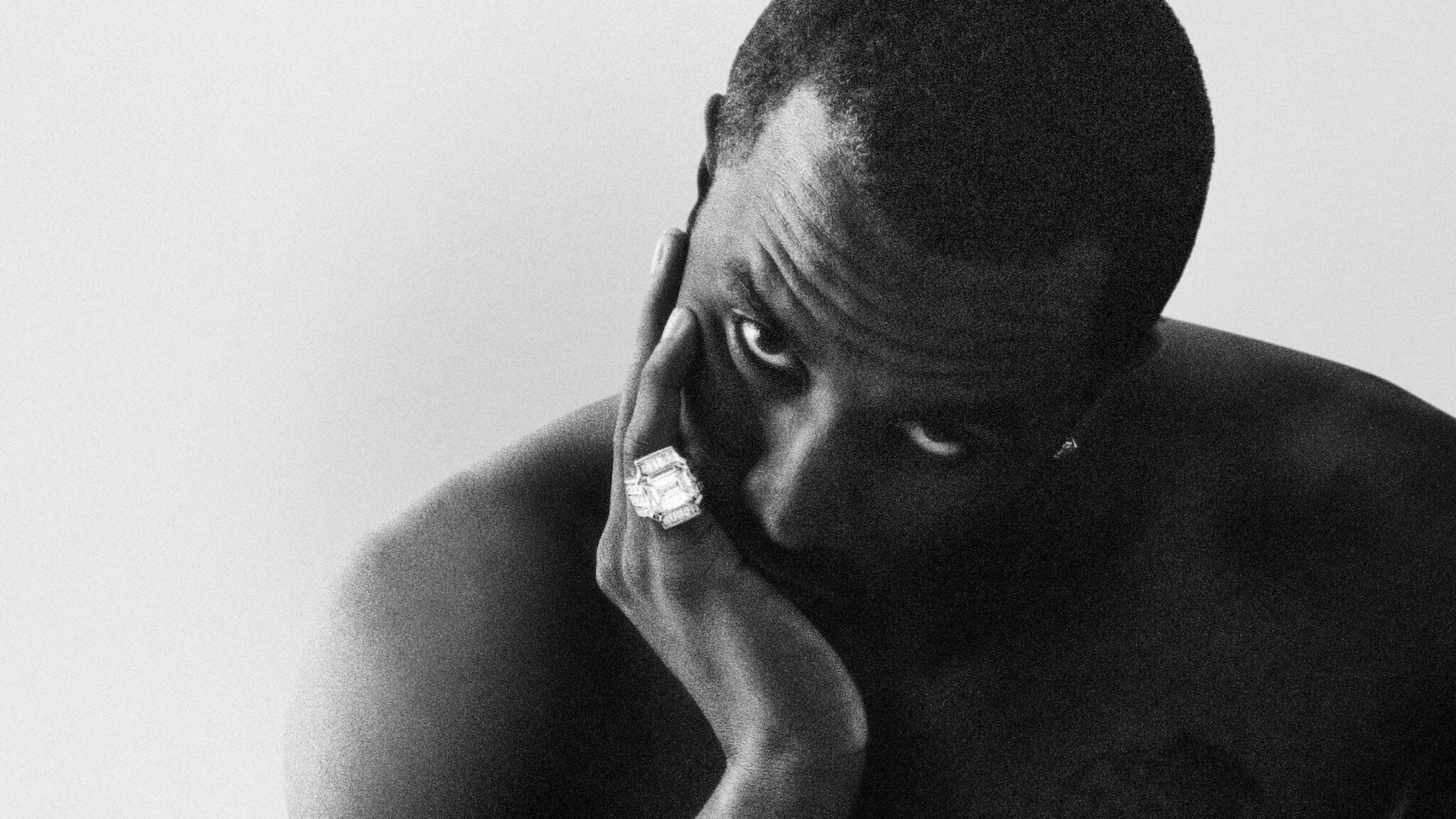
Just finished the Sean Combs documentary. It’s nauseating how a generation of politicians and influencers gave cover to this operator as a viable “empowerment” example for Black people. Democrats and respectable liberals loved it, flaunting playlists like credentials. He was offered as proof that the system worked—not because the harm wasn’t visible, but because it was useful. Extreme wealth, ruthless behavior, and proximity to power could be reframed as liberation, which conveniently required no redistribution, no accountability, and no structural change.
This wasn’t ignorance. It was moral outsourcing.
What makes it doubly grotesque is the double betrayal. First, the victims—silenced, paid off, litigated into exhaustion, or ridiculed. Second, an entire generation of Black kids told: this is what power looks like. Not collective strength. Not dignity. Not refusal. But domination, excess, and proximity to capital. Plantation logic with better lighting and a Beats sponsorship. Aspiration without responsibility. Structural injustice rebranded as a lifestyle choice.
The metaphor isn’t loose—it’s literal in industry history. Record deals have long functioned as modern indenture: advances as debt, masters owned forever, royalties recouped last (if ever). Black artists bore the brunt, from bluesmen paid flat fees while labels reaped millions, to Prince’s “slavery” denunciation. Combs, elevated as proof of Black capitalism, inherited and refined this. Bad Boy artists alleged predatory terms: minimal upfronts, perpetual control, NDAs silencing dissent. Success stories masked the ledger—excess as liberation, while victims (financial or otherwise) were collateral.
Corporations loved this model because it collapsed politics into branding. Inequality wasn’t something to be dismantled—it was a marketing constraint. Abuse wasn’t a moral red line; it was a PR variable. The way violence gets canonized as “grind” is not accidental—it’s instructional.
The Collapse of Music as Culture
The documentary skirts the real event: the moment the music industry stopped pretending it was about music. The old system was vicious and racist, but it still required songs, scenes, friction. Even its predators needed talent to misbehave. There were subcultures to manage, gatekeepers to corrupt, audiences to convince. Failure was possible.
But here’s what matters: the old exploitation was through culture. It destroyed people while they made things that mattered—songs that became part of collective memory, movements, identity. The exploitation was real and often fatal, but it was parasitic on something generative. Cultural residue accumulated even as individuals were consumed. The old system was a vampire.
By the late ’90s, that requirement vanished. Music was replaced by brand-safe success theater. Scenes were replaced by platforms. Taste was replaced by metrics. Risk was replaced by sponsorship. The artist became a personality asset, and the song became optional.
The new model is exploitation of culture—or really, of the appearance of culture. It doesn’t need the thing itself, just the aesthetic, the signifiers, the brand position. It consumes cultural reputation—the accumulated trust, the symbolic capital that previous generations built and died building—and converts it directly into licensing opportunities. The new system is a loan shark calling in debts that other people earned.
This is why it’s worse. It’s not just that people get hurt (they always did). It’s that nothing is left behind. No songs that matter. No movements. No friction that generates new forms. Just the burning down of credibility itself.
The crack comparison is exact. Crack didn’t just harm individuals—it destroyed neighborhood trust, family structures, the social fabric that had survived previous harms. It metabolized community coherence itself. The current model does that to culture. It runs on the stored energy of past credibility—“hip-hop,” “Black excellence,” “entrepreneurship”—and converts it directly into cash flow without regeneration. Combs could only work as an “empowerment” figure because of what hip-hop had been, what it had meant. He was burning that meaning as fuel.
And when it’s gone, it’s gone. You can’t make new crack from crack. You can’t make new culture from brand extensions. That’s why the betrayal cuts deeper. It’s not just extracting value from artists—it’s extracting value from the idea of artistry itself, from the cultural legitimacy that generations built. And once that’s depleted, there’s nothing to exploit anymore.
The system eats its own premise.
The Protocol Era
Sean Combs wasn’t a musician so much as a protocol. Vibes instead of songs. Access instead of craft. Visibility instead of risk. Sponsorship instead of patronage. A licensing stack wearing sunglasses. He didn’t build tools—he owned pipelines. He didn’t create culture—he controlled throughput. Not creative capital, but attention arbitrage.
Once that model proved scalable, American Idol was inevitable. It was the industry telling the truth: we don’t need artists, we need compliant personalities that test well with advertisers. Judges replaced scenes. Audience voting replaced taste. Corporate sponsors became A&R. The winner wasn’t the best singer—it was the least alarming one.
This was sold as democratization. Anyone can make it. Anyone can be a mogul. These were downward-shifted lies. When the system fails—and it must—the blame falls on the individual for not branding harder, not optimizing enough, not being legible to the market.
This is why music is the prequel to tech. The same logic, just slower and louder. Platforms instead of labels. Metrics instead of taste. Access instead of power. The same lie repackaged: proximity is success, silence is professionalism, and abuse is a cost of scale.
Combs wasn’t an exception. He was a prototype. And that’s the part the documentary can’t quite say out loud.
What Happened to Music Was Not an Isolated Collapse
It was a successful experiment. The industry learned how to extract value without cultivating judgment, how to replace scenes with platforms, how to turn participation into consent and metrics into legitimacy. Once that worked at scale, it was portable.
Tech didn’t invent this logic—it inherited it.
The platform era simply removed the remaining human bottlenecks. No A&R. No editors. No unions. No scenes to negotiate with. Just dashboards, incentives, and throughput. Creativity became optional; legibility became mandatory. The product was no longer culture but behavior, tuned, nudged, and monetized in real time.
What the music industry had proven was that you could hollow out a field, keep the aesthetics, and still call it democratization. Upload was freedom. Visibility was success. Failure was personal.
Tech generalized this into a worldview.
Platforms don’t ask whether something is good, true, or humane. They ask whether it scales, whether it retains attention, whether it can be defended. Abuse becomes an edge case. Harm becomes externality. Power becomes access to the pipe.
This is why so many tech founders sound like failed DJs and so many influencers sound like junior A&R reps. They’re running the same playbook: control the channel, let the content fight it out, collect rent on the traffic.
From Tech to Prediction Markets: Judgment Without Responsibility
Once culture could be hollowed into metrics, it was only a matter of time before judgment itself would be priced out of existence.
Prediction markets are not a break from this system. They are its logical endpoint.
Where music replaced taste with metrics, and tech replaced judgment with engagement, prediction markets replace decision-making with pricing. No one has to be right. No one has to be accountable. The market has spoken—and the market, conveniently, cannot be cross-examined.
This is the final abstraction:
belief without belief-holders,
decisions without deciders,
power without authorship.
Prediction markets promise clarity, but what they actually provide is plausible deniability at scale. If the outcome is wrong, no one erred—the signal was merely mispriced. If the policy fails, no one chose poorly—the odds were rational at the time. Responsibility dissolves into liquidity.
Just as American Idol trained audiences to confuse voting with taste, prediction markets train institutions to confuse pricing with wisdom. The more complex and destructive the decision, the more attractive the abstraction becomes.
This is not foresight. It is abdication.
Epistemological Capitalism and the Evolution Toward Deniability
What we’re really documenting is the evolution of what we might call epistemological capitalism—systems that profit not from knowing things but from appearing to know things, not from making good decisions but from making decisions that can’t be called bad because no one can be identified as having made them.
The Combs case matters in this framework not just because of individual harm (though that’s primary) but because it reveals how thoroughly institutions will embrace obvious predation when it can be packaged as empowerment narrative. The documentary is weak precisely here: it can’t name the system that made Combs legible as success rather than warning.
Organizations don’t optimize for good outcomes; they optimize for outcomes they can’t be blamed for. The more consequential the decision, the more valuable the deniability. The system doesn’t evolve toward truth. It evolves toward deniability.
If the progression is from “craft optional” to “judgment inefficient” to “responsibility unnecessary,” what’s the next stage? We’re approaching “truth irrelevant”—systems so good at generating plausible deniability that the question of what actually happened becomes unaskable.
A Seamless Destination
Seen this way, the path is continuous:
• Music taught us that craft was optional.
• Tech taught us that judgment was inefficient.
• Prediction markets teach us that responsibility is unnecessary.
At every stage, the same promise is made: this is more democratic. At every stage, the same result appears: power concentrates, harm diffuses, and failure is blamed downward.
Sean Combs is not a cultural outlier in this story. He is an early node. A prototype of the figure who understands that control over access beats creation, that proximity beats merit, and that silence scales better than dissent.
And this—more than any individual scandal—is the real inheritance.
Leave a Reply